History
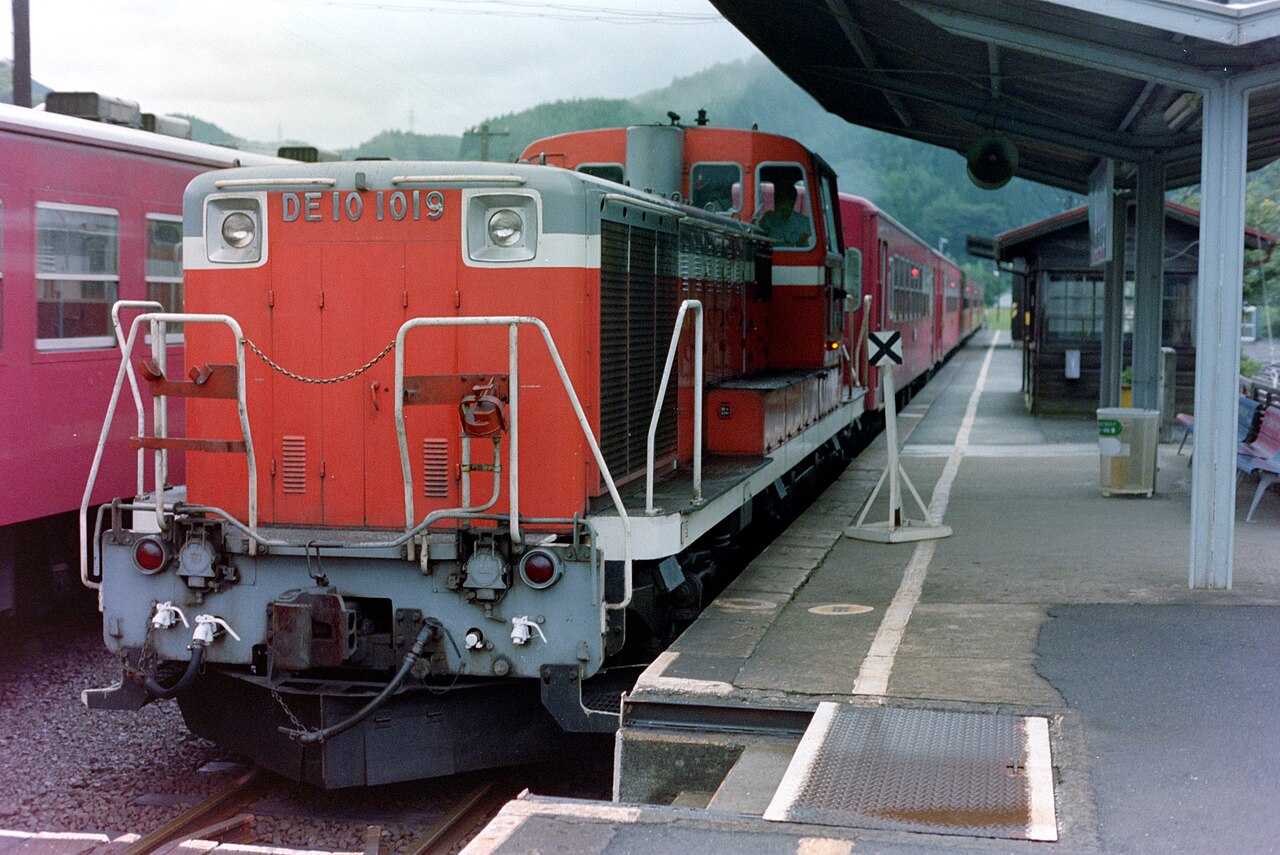
The single-engine approach had first been tried in the DD20, prototyped in two batches in 1963 and 1965, but that design was not mass-produced because of problems including an excessive axle load and frequent wheelslip from poor adhesion; the DE10 was then developed to reconcile axle load and tractive effort with general-purpose versatility. Because it carried only one engine, the locomotive used an asymmetric "semi-center cab" layout, the long No.1-end bonnet housing the engine and cooling equipment and the short No.2-end bonnet housing the light-oil-fired steam-heating boiler (SG). The two driving desks inside the cab faced sideways so that, with shunting and short turn-back running as the main purpose, the driver could change the direction of travel simply by turning his head while seated; the controls followed electric-multiple-unit practice, with the master controller on the left and a self-lapping brake valve on the right.
Power came from a single V12 DML61ZA diesel engine of 1,250 hp, raised to 1,350 hp with the uprated DML61ZB engine fitted from the DE10-1000 subclass onward; the DML61ZA was itself derived from the DD51's DML61Z by giving the intercooler its own separate circuit and strengthening the pistons to raise the rated output. The DW6 hydraulic transmission was a Voith-type unit offering two ranges, a high range for mainline haulage (up to 85 km/h) and a low range for shunting (up to 45 km/h); it contained three torque converters of differing characteristics and two speed-change valves that were switched as required to suit each duty. Every locomotive except the 901 prototype was fitted for multiple-unit operation, and a DE10 could also work in multiple with a DD51, though the maximum speed was then restricted to 75 km/h.
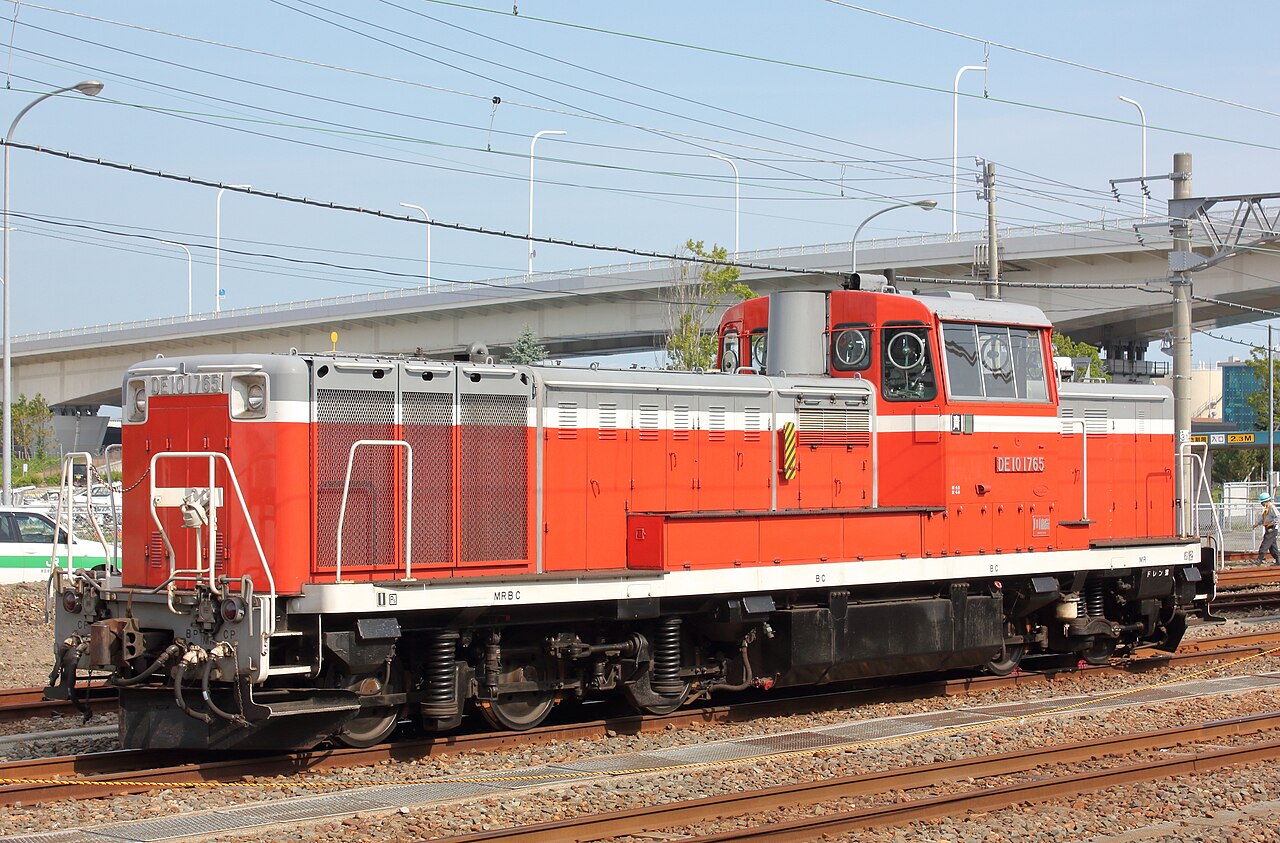
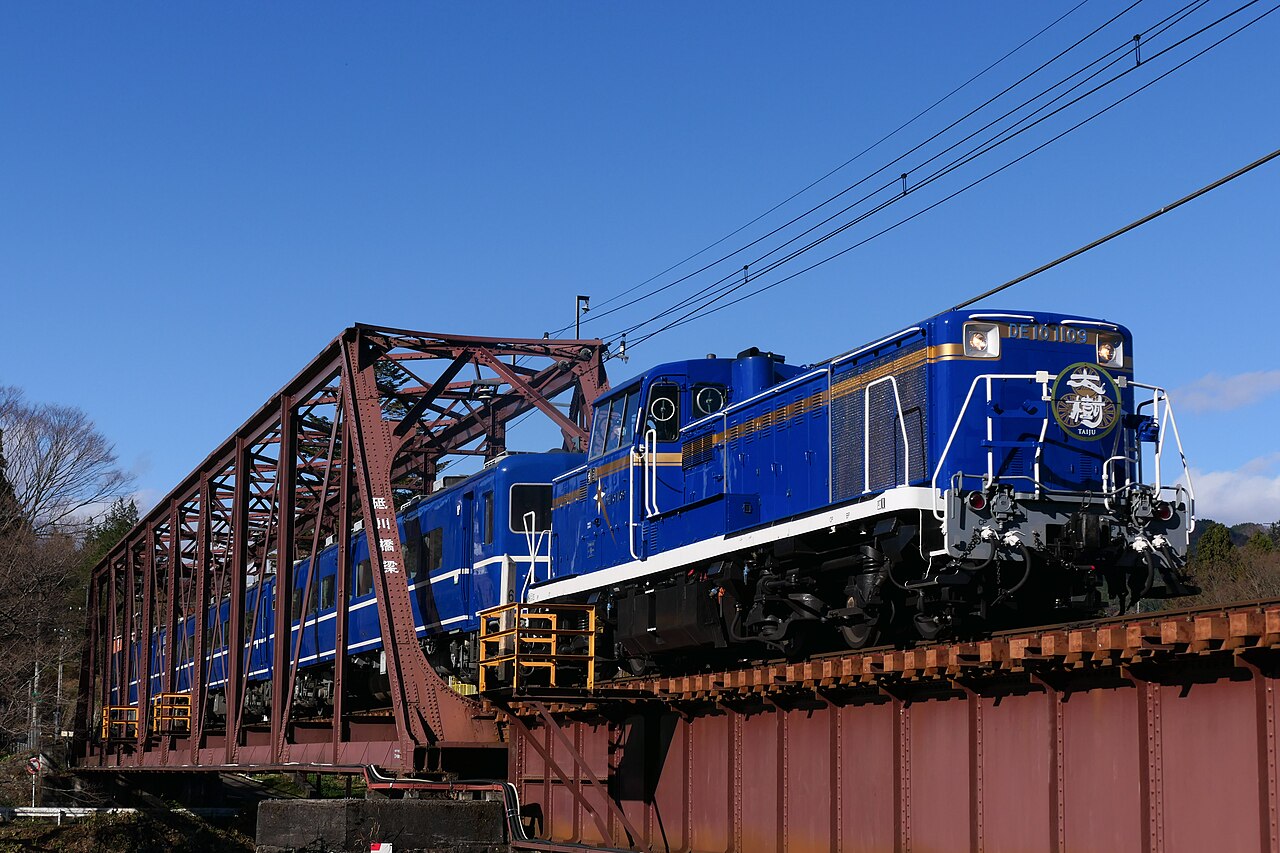
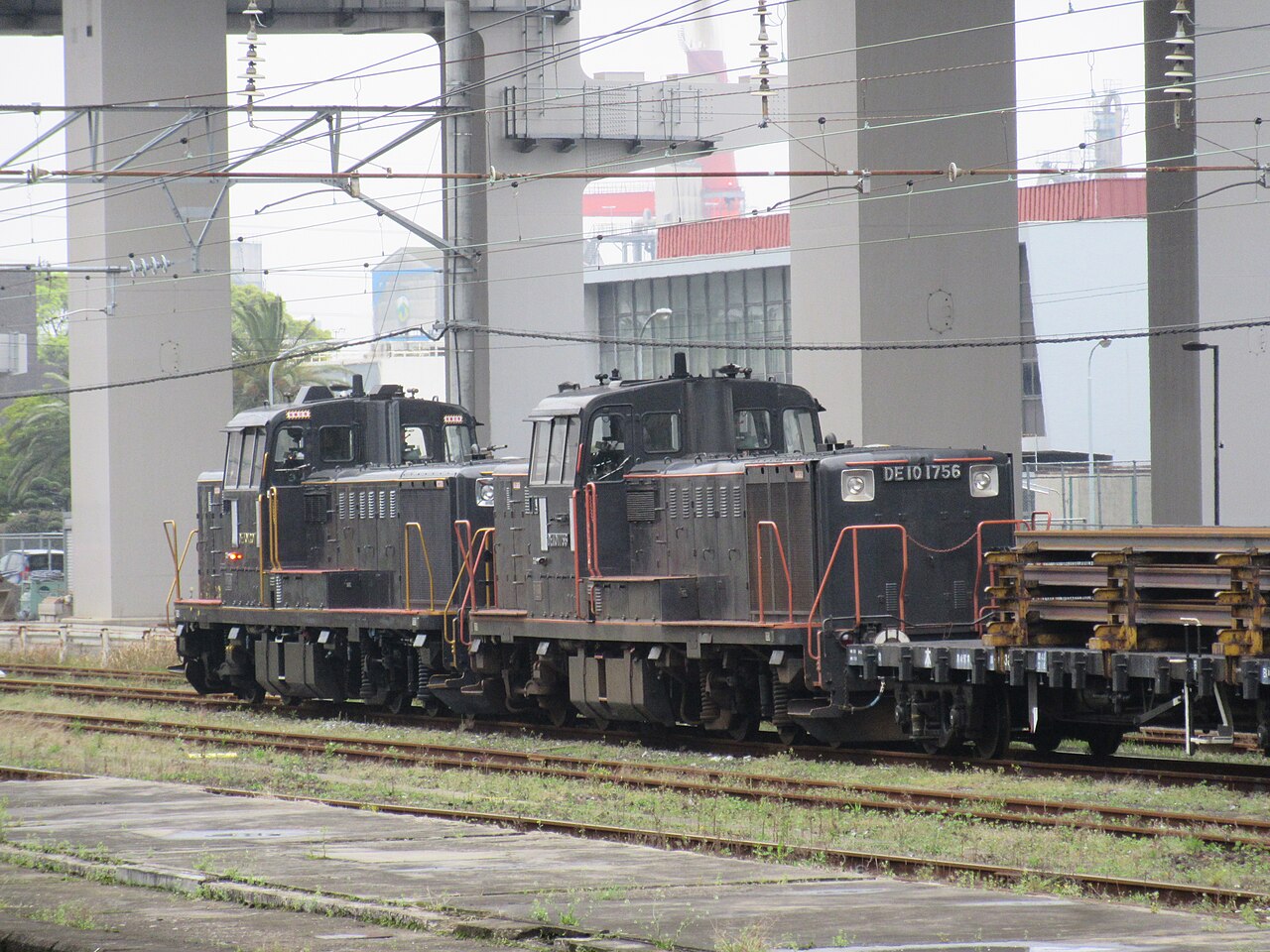
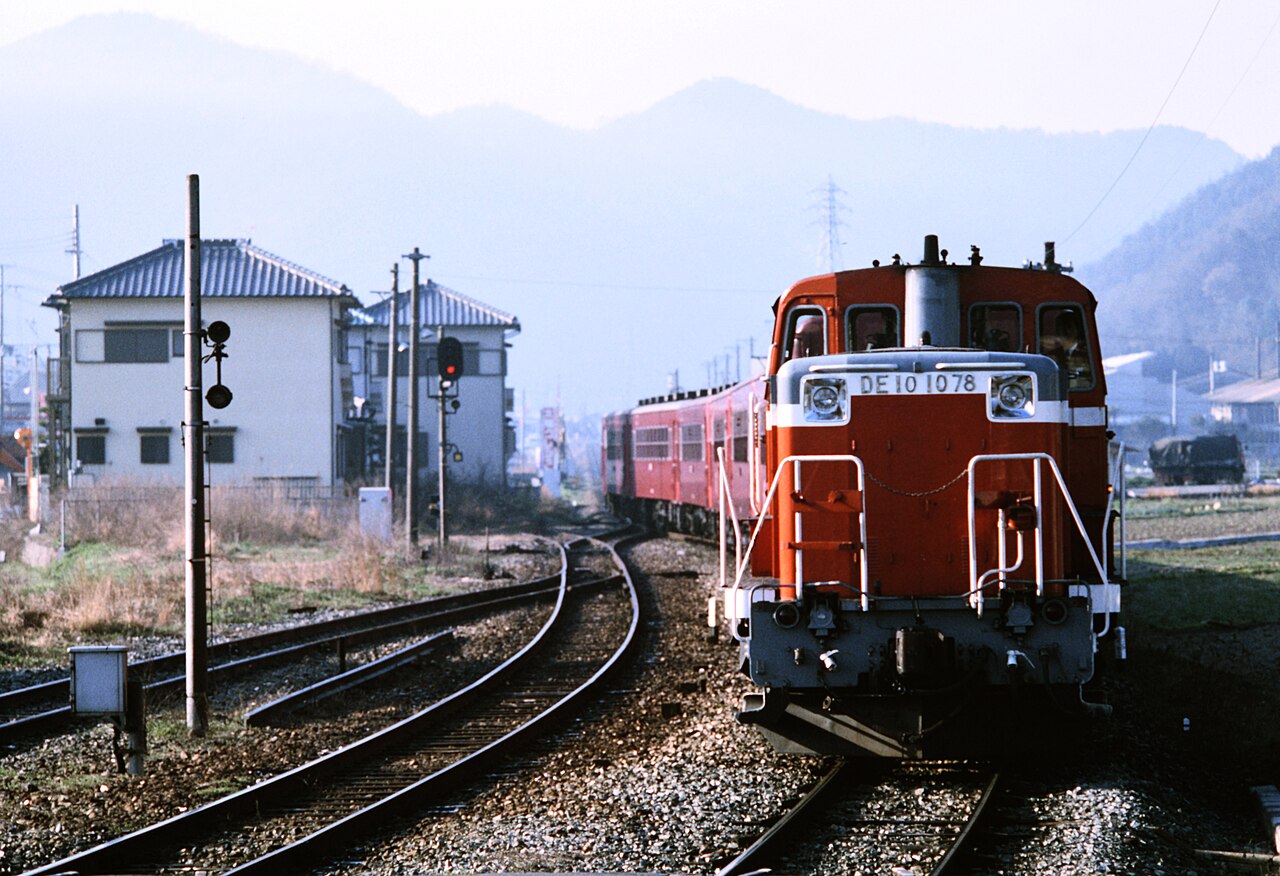
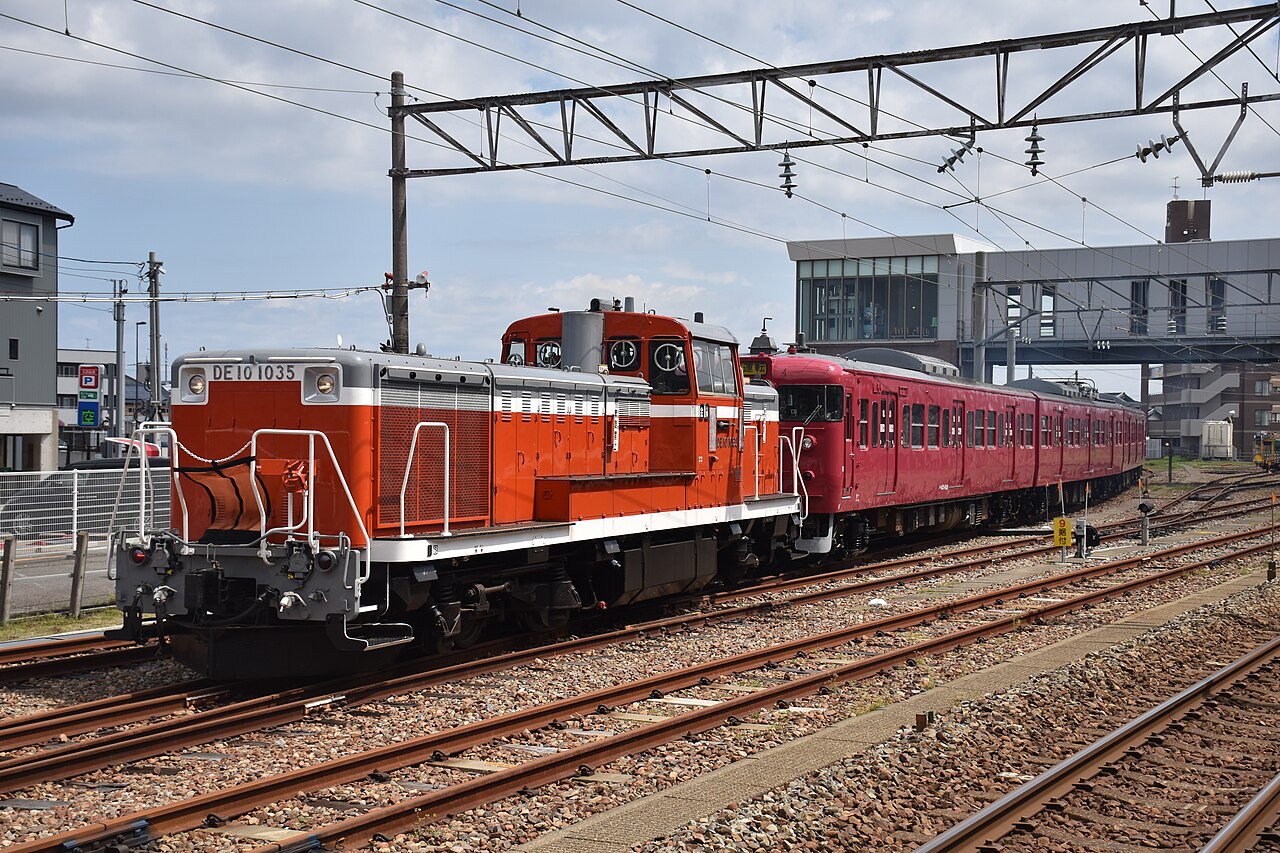
In its original guise the locomotive was painted vermillion (Vermillion No.4) with the upper body and roof in grey (Grey No.1), the two separated by a white band running right around the body. Several subclasses were produced: 158 DE10-0 locomotives were built with steam-heating boilers for passenger use; 74 DE10-500 locomotives were built from 1968 with concrete ballast in place of the steam boiler for freight use; one prototype, DE10 901, was built in 1967 as a heavy shunting locomotive with ballasting increasing its weight to 70 tonnes, and formed the basis for the Class DE11 design; 210 DE10-1000 locomotives were built from 1969 with steam-heating boilers and the uprated 1,350 hp DML61ZB engines; and 265 DE10-1500 locomotives were built from 1969 with the uprated engines and concrete ballast for freight use. A later DE10-3000/3500 subclass consisted of JR Freight shunting locomotives rebuilt in 2009 from former JR East Class DE15 snow-plough locomotives.
The type was originally built by Japanese National Railways; the builders were Kisha Seizo and Nippon Sharyo. Although 708 were built, two were written off in accidents while construction was still in progress, so the full 708 were never on the roster simultaneously; the peak number in stock was 706. As of 1 April 2016, 138 locomotives remained in operation. DE10 1, the first of the class, was previously stored at JR Shikoku's Tadotsu depot and was scheduled to be preserved at the Shikoku Railway (Heritage) Museum from July 2014; DE10 503 is preserved at the Otaru Museum in Otaru, Hokkaido. The DE10 also gave rise to two related classes: the JNR Class DE11 heavy switcher locomotive and the JNR Class DE15 snowplough propulsion unit. The DE10 classification breaks down as D (diesel locomotive), E (five driving axles), and 10 (a locomotive with a maximum speed less than 85 km/h).
Timeline
- 1966The first Class DE10 locomotives enter service; the type is built between 1966 and 1978 (708 in total) as a C-B diesel-hydraulic road switcher with a single 1,250 hp V12 engine, developed to replace steam on lightly built branch lines and in shunting service.
- 1969Production of the uprated subclasses begins: the DE10-1000 (210 built, steam-heating boilers, 1,350 hp DML61ZB engine) and the DE10-1500 (265 built, uprated engine with concrete ballast for freight use).
- 1987At the 1 April privatisation of Japanese National Railways, the DE10 became the only single JNR class inherited by all seven JR companies; about half the fleet passed to the JR group — 23 to JR Hokkaido, 68 to JR East, 13 to JR Central, 49 to JR West, 37 to JR Shikoku, 19 to JR Kyushu, and 151 to JR Freight.
- 2016As of 1 April, 138 locomotives remain in operation across the JR group.
- 2023JR Shikoku ends DE10 operation when its last unit, DE10 1139 at Takamatsu, is retired at the end of March (formally withdrawn 30 September 2023), eliminating the class from that company.
- 2025JR Freight ends all DE10 operation in February following replacement by the DD200 and HD300; the class survives in JR East and JR West rosters for shunting and special workings.
Sources
Facts last verified 6 June 2026.
Gallery 5 photos
Every photo for this page. Tap any image to view it full-size. All from Wikimedia Commons (credit under each).