History
The line's origins are far humbler than its present role. It began as the Tamagawa branch (Tamagawara branch), opened by the Keiō Electric Tramway — Keio's predecessor — between Chōfu and Tamagawara (today's Keiō-Tamagawa) on 1 June 1916. The single-stop spur was one of several so-called 'gravel railways' built to carry gravel quarried from the Tama River into central Tokyo; demand surged after the 1923 Great Kantō Earthquake, when reconstruction in concrete consumed vast quantities of river gravel. The English source records that the line opened as a single-track spur electrified at 600 V DC and was double-tracked on 1 April 1924; Tamagawara was renamed Keiō-Tamagawa on 1 May 1937, and the voltage was raised to 1,500 V DC on 4 August 1963. For decades the branch also served leisure traffic centred on the Keiōkaku amusement ground, which Keio opened in front of Tamagawara Station in 1927.
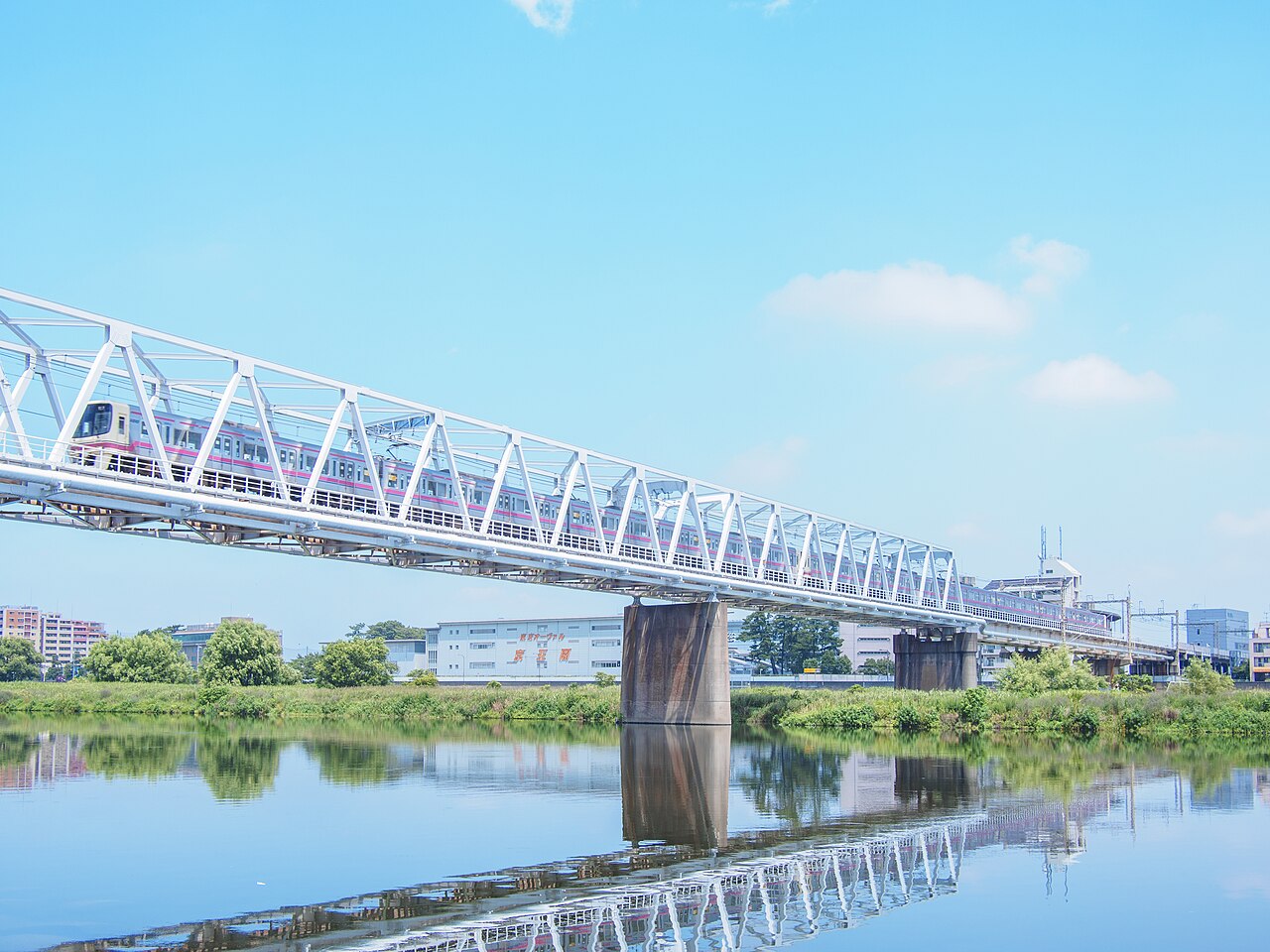
The transformation into a trunk commuter line came with the planning of Tama New Town, one of Japan's largest new-town developments. As Sagamihara and its surroundings were designated for development under postwar regional planning, local municipalities lobbied Keio to build a new line, and in 1963 Keio applied for a licence to extend the Tamagawa branch across the Tama River and westward through the future Tama New Town area to Hashimoto and beyond. Construction of the new line began in 1968. On 1 April 1971 the Keiō-Tamagawa–Keiō-Yomiuri-Land section (2.7 km) opened and the line was renamed the Sagamihara Line. Progress beyond that point stalled when Keio judged the remaining construction unprofitable: the Japanese source notes that the company put the cost of the line at around ¥41 billion alongside the several-tens-of-billions of yen needed to quadruple-track the Chōfu–Shinjuku approach. The impasse was broken by a new financing arrangement in which the Japan Railway Construction Public Corporation built the line and the private railway repaid principal and interest over 25 years — the beginning of the so-called 'P-Line' (public-corporation private-railway) scheme. Under it the Keiō-Yomiuri-Land–Keiō-Tama-Center section (9.8 km) opened on 18 October 1974, though land-acquisition difficulties and the oil crisis delayed it about half a year and left a short single-track stretch in operation for some months after opening.
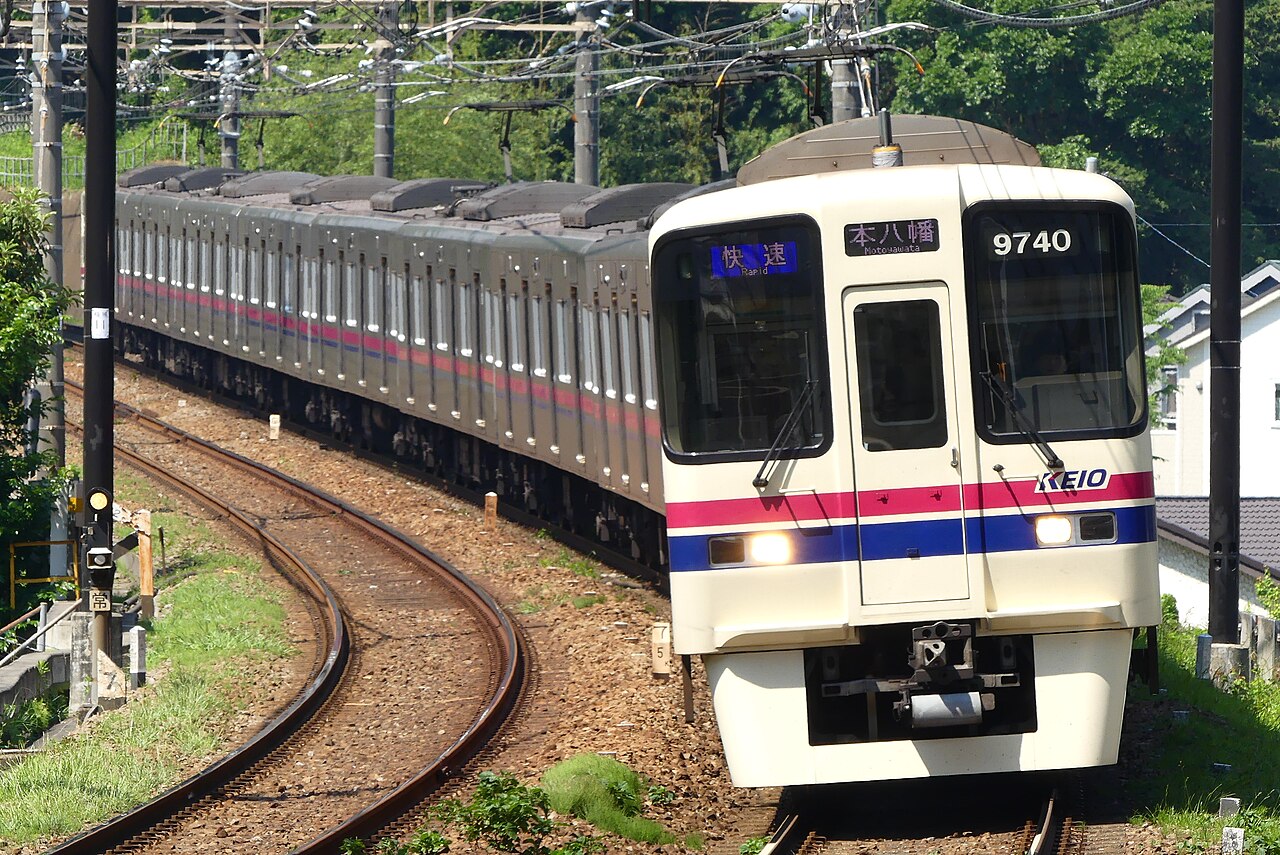
The westward extensions followed as Tama New Town grew. The Keiō-Tama-Center–Minami-Ōsawa section (4.5 km) opened provisionally on 21 May 1988, and the Minami-Ōsawa–Hashimoto section (4.4 km) opened on 30 March 1990, completing the line — 22 years after construction had begun in 1968. The following year, Rapid services began through-running from Hashimoto to Motoyawata on the Toei Shinjuku Line, which the Japanese source describes as creating an east–west artery linking northern Kanagawa with north-western Chiba. Tamasakai Station, a locally petitioned ('request') station between Minami-Ōsawa and Hashimoto, opened on 6 April 1991. The planned further extension from Hashimoto toward Sagami-Nakano (near Lake Tsukui) was abandoned — Keio surrendered the licence in March 1988 — owing to land-acquisition and cost difficulties, so the Sagamihara Line settled into its role serving Tama New Town residents and the people of Sagamihara. The per-section construction costs recorded in Keio's company history rose sharply across the project: about ¥3.8 billion for Keiō-Tamagawa–Keiō-Yomiuri-Land, about ¥23.2 billion for Keiō-Yomiuri-Land–Keiō-Tama-Center, and about ¥54.1 billion for Keiō-Tama-Center–Hashimoto. To help recover the construction cost, a distance-based surcharge of ¥10–¥80 was levied on the Keiō-Tamagawa–Hashimoto section; as cost recovery progressed the surcharge was reduced from 17 March 2018 and progressively eliminated, the last portion being removed with the fare revision of 1 October 2023.
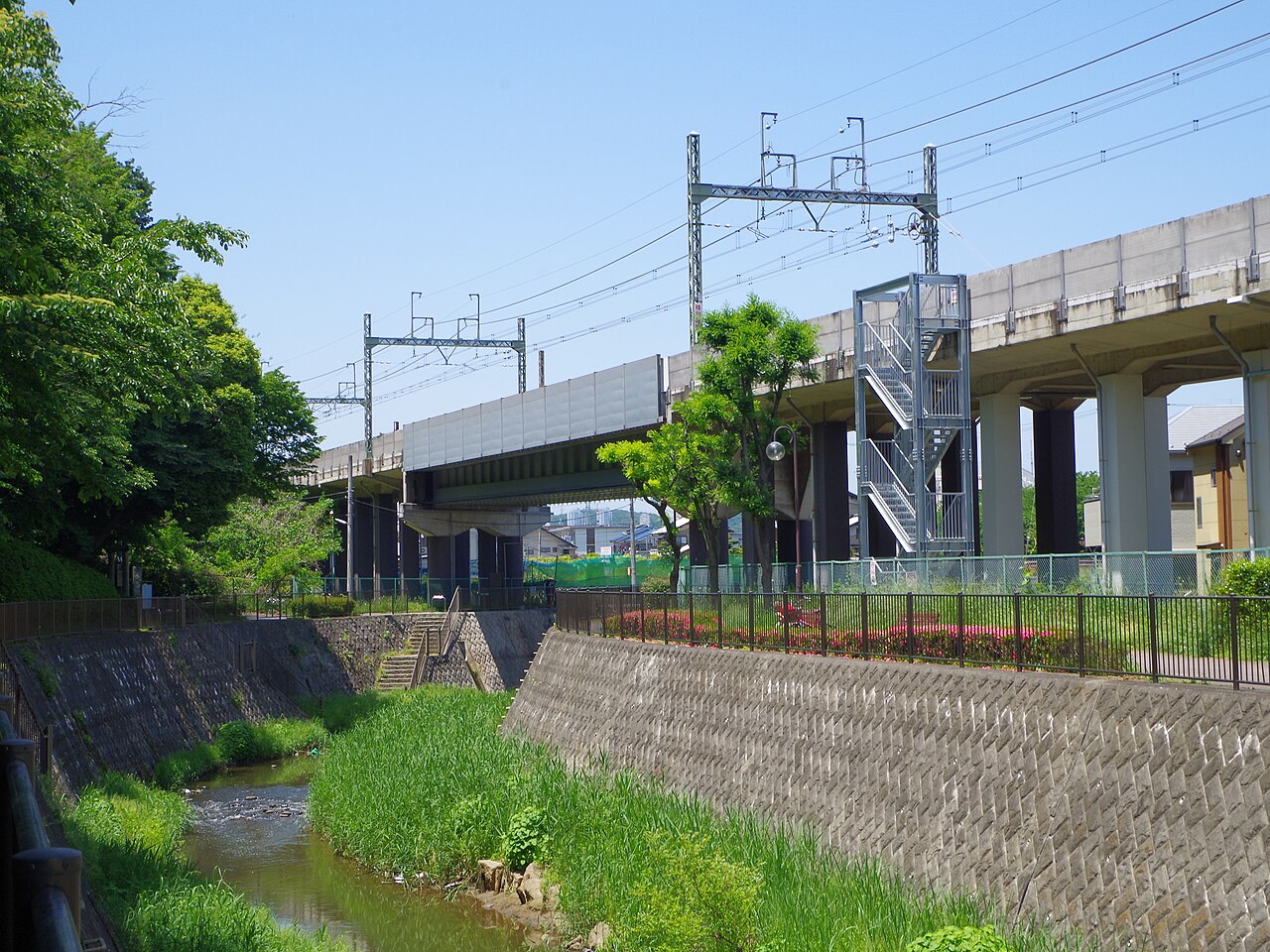
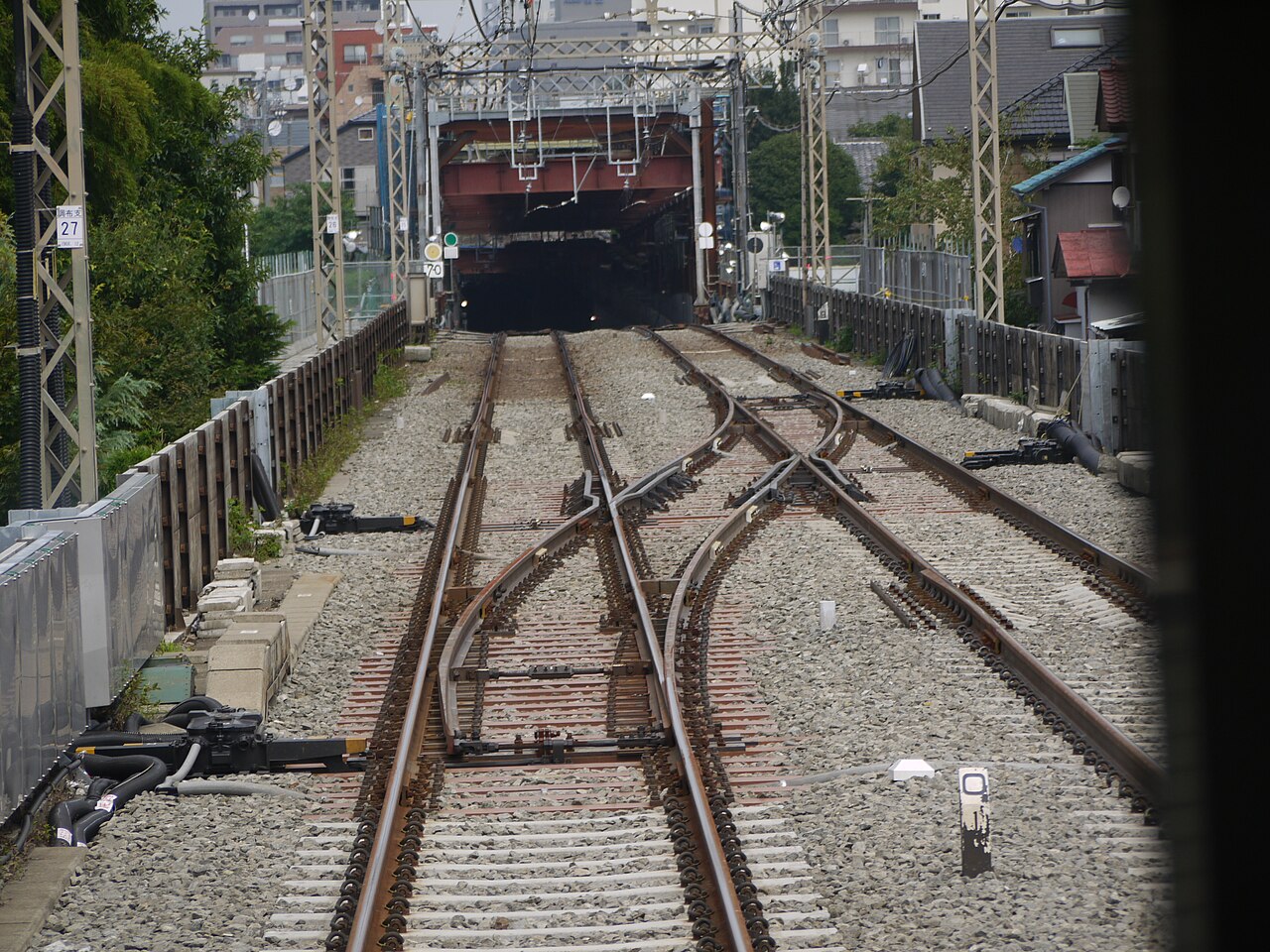
Later upgrades refined the line. The maximum speed was raised from 105 km/h to 110 km/h on 24 December 1997, ATC came into use on 26 March 2010, and the Chōfu–Keiō-Tamagawa section was placed underground on 19 August 2012 — after which, the Japanese source states, the Sagamihara Line had no level crossings at all, being entirely elevated or underground. Station numbering was introduced on 22 February 2013.
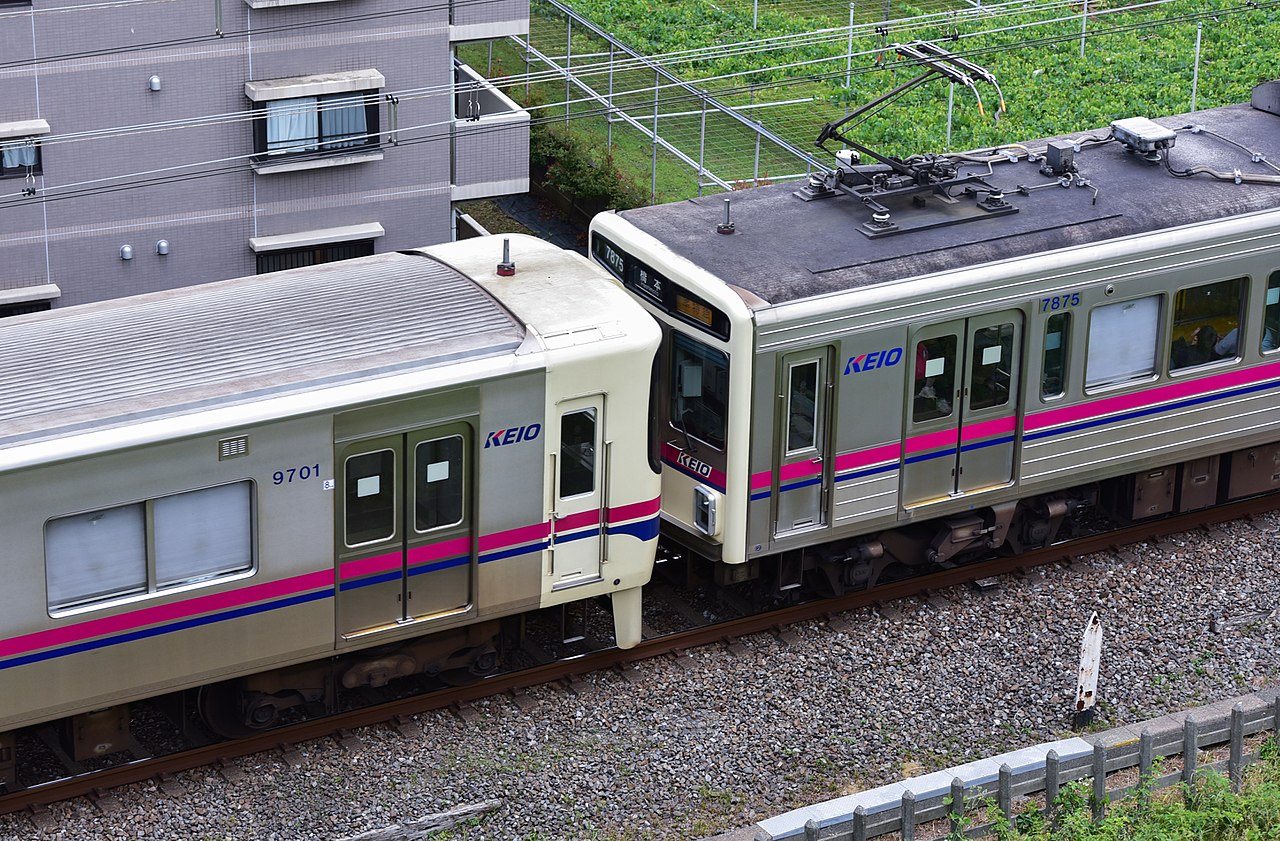
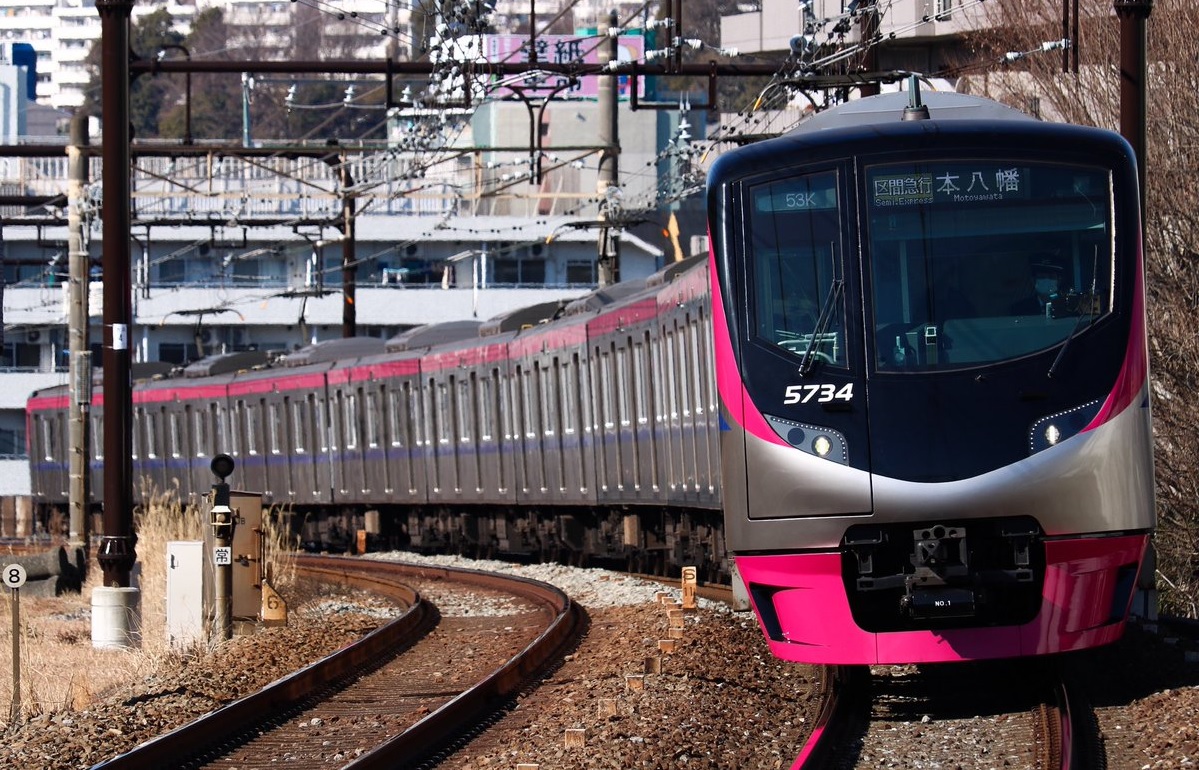
Today the line is primarily a commuter route into central Tokyo. From its hub at Keiō-Tama-Center it provides access to Tama New Town — which spreads between Wakabadai and Tamasakai — jointly with the Odakyū Tama Line, with which it runs directly parallel between Keiō-Nagayama and Keiō-Tama-Center and competes against Odakyū between Shinjuku and the Tama New Town stations. Most trains run through from Chōfu onto the Keiō Line to link Shinjuku with Hashimoto, and many Rapid and Semi Express services through-run with the Toei Shinjuku Subway Line, with which mutual through operation has been conducted since March 1980. Rapid and Semi Express services stop at all stations on the line. Since 22 February 2018 the reserved-seat Keiō Liner has run on the line, with a ¥410 seat-reservation fee. The eastern terminus, Hashimoto, is planned to gain the provisionally named 'Kanagawa Prefecture Station' on the future Linear Chūō Shinkansen (maglev) line.
Stations on this line
12 stations tracked on the live map, listed alphabetically. Select any to read its page.
Timeline
- 19161 June: the Keiō Electric Tramway opens the Chōfu–Tamagawara (now Keiō-Tamagawa) section (1.0 km) as a single-track, 600 V DC gravel-railway spur — the origin of the Sagamihara Line.
- 19241 April: the Chōfu–Tamagawara section is double-tracked.
- 19371 May: Tamagawara Station is renamed Keiō-Tamagawa.
- 19634 August: the overhead voltage is raised to 1,500 V DC. Keio also applies (20 January 1964) for a licence to extend the branch toward Sagami-Nakano.
- 1968Construction of the new (Sagamihara) line begins.
- 19711 April: the Keiō-Tamagawa–Keiō-Yomiuri-Land section (2.7 km) opens and the line is renamed the Sagamihara Line.
- 197418 October: the Keiō-Yomiuri-Land–Keiō-Tama-Center section (9.8 km) opens, built by the Japan Railway Construction Public Corporation under the new 'P-Line' scheme; the oil crisis and land issues delayed it about half a year.
- 198016 March: mutual through-running with the Toei Shinjuku Subway Line begins (initially Iwamotochō–Keiō-Tama-Center).
- 198821 May: the Keiō-Tama-Center–Minami-Ōsawa section (4.5 km) opens provisionally. (March: Keio surrenders the licence for the Hashimoto–Sagami-Nakano extension.)
- 199030 March: the Minami-Ōsawa–Hashimoto section (4.4 km) opens, completing the line — 22 years after construction began in 1968.
- 19916 April: Tamasakai Station, a locally petitioned 'request' station, opens between Minami-Ōsawa and Hashimoto. (1 September: Keio through-services extended to Motoyawata.)
- 199228 May: a Limited Express begins running between Keiō-Shinjuku and Hashimoto (the first-generation Sagamihara Line Limited Express, later withdrawn in 2001).
- 199724 December: the maximum operating speed is raised from 105 km/h to 110 km/h.
- 201026 March: ATC comes into use on the line.
- 201219 August: the Chōfu–Keiō-Tamagawa section is placed underground, after which the Sagamihara Line has no level crossings at all.
- 201322 February: station numbering is introduced; the Limited Express is reinstated on the Keiō-Shinjuku–Hashimoto route.
- 201822 February: the reserved-seat Keiō Liner service (¥410 seat-reservation fee) begins, initially in the down direction; the line's distance-based fare surcharge is also reduced (17 March).
- 20231 October: the last remaining portion of the Keiō-Tamagawa–Hashimoto construction-cost fare surcharge is abolished in the fare revision.
Sources
Facts last verified 3 June 2026.
Gallery 5 photos
Every photo for this page. Tap any image to view it full-size. All from Wikimedia Commons (credit under each).